

Access to water, sanitation, hygiene, environmental cleaning and waste management: the latest report from the WHO/UNICEF Joint Monitoring Programme highlights progress made over the past decade, while revealing persistent gaps that continue to undermine safe healthcare in many parts of the world.
Access to essential services is fundamental to delivering safe, quality healthcare. Yet many healthcare facilities worldwide continue to face challenges in providing adequate water, sanitation, hygiene, environmental cleaning and healthcare waste management.
The 2026 report from the World Health Organization (WHO) and UNICEF, published through the WHO/UNICEF Joint Monitoring Programme (JMP), provides an overview of the progress achieved since 2015 and the gaps that remain. Its findings highlight persistent inequalities in access to essential services, with important implications for infection prevention, patient safety and the working conditions of healthcare professionals.
Among the issues addressed, healthcare waste management remains a significant challenge, requiring appropriate infrastructure, effective procedures and solutions adapted to local needs.
Healthcare Waste Management: Essential Services Remain Insufficient
Healthcare waste management is a critical component of infection prevention and public health. Infectious waste and sharps can expose patients, healthcare professionals, waste handlers and surrounding communities to health risks when they are not properly segregated, treated and disposed of.
According to the estimates presented in the 2026 report, 71% of healthcare facilities had basic healthcare waste management services. However, 7% had no waste management service at all, affecting approximately 571 million people.
The JMP defines a basic waste management service according to specific criteria: waste must be safely segregated into at least three categories, and sharps and infectious waste must be safely treated and disposed of.
These requirements underline the importance of an organised approach to healthcare waste management, from segregation at the point of generation to treatment and final disposal. Without appropriate systems in place, the risks associated with infectious waste can extend beyond healthcare facilities and affect the wider community.
Improving waste management therefore involves more than ensuring that waste is collected. It also requires adequate treatment capacity, trained personnel, appropriate equipment and reliable procedures at every stage of the process.
Water, Hygiene and Sanitation: Essential Services Remain Out of Reach for Many
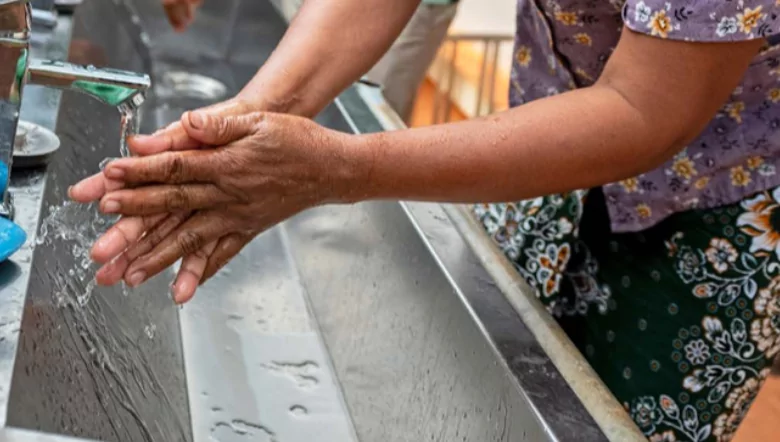
Safe healthcare depends on a combination of complementary services. Access to water, functional hygiene facilities, adequate sanitation and clean environments all contribute to infection prevention and the quality of patient care.
The figures presented in the report illustrate the scale of the challenge:
- 85% of healthcare facilities had basic water services.
- 72% had basic hygiene services.
- 40% had basic sanitation services.
- 59% had basic environmental cleaning services.
Although access to water and hygiene has improved over the past decade, the figures show that essential services remain unevenly distributed.
Sanitation is a particularly significant concern. According to the report’s estimates, 11% of healthcare facilities had no sanitation service at all, affecting approximately 936 million people.
Regarding hygiene, 8% of facilities had no basic hygiene service, affecting approximately 652 million people.
Environmental cleaning also remains a major challenge. 18% of healthcare facilities had no environmental cleaning service, affecting approximately 1.5 billion people.
These gaps can undermine infection prevention efforts and make it more difficult for healthcare professionals to maintain safe care environments. Addressing them requires functional infrastructure, trained staff, established protocols and sufficient resources to ensure that essential services remain available and effective.
Progress Since 2015, but Further Efforts Are Needed
The 2026 report identifies improvements across several areas over the past decade.
The proportion of healthcare facilities with basic water services increased from 76% in 2015 to 85% in the latest estimates. For basic hygiene services, the proportion rose from 55% to 72%.
These developments reflect efforts undertaken by countries and their partners to improve conditions in healthcare facilities. However, global progress does not mean that all facilities have benefited equally. Millions of people continue to rely on healthcare facilities without access to essential services.
The report also highlights the importance of data availability. Its estimates are based on information reported by countries and regions, and the number of countries covered varies across indicators. Strengthening monitoring systems and improving the availability of reliable data remain important for understanding needs and tracking progress over time.
Ultimately, progress cannot rely solely on infrastructure development. It also requires coherent public policies, measurable objectives, adequate funding and mechanisms to assess results over time.
Strengthening Investment and National Strategies
Beyond presenting the data, the report highlights the need for sustained action to accelerate progress in healthcare facilities.
WHO and UNICEF emphasise the importance of supporting countries in assessing their needs, strengthening national standards and developing roadmaps to improve access to essential services. Monitoring progress and coordinating action across health systems are also important elements of this approach.
Progress has been made in areas such as baseline assessments and the development of standards for water, sanitation, hygiene and healthcare waste management. However, further efforts are needed to finance action plans, improve infrastructure and strengthen the capacity of healthcare teams on the ground.
The challenges are interconnected. Improving water and hygiene services, maintaining clean environments and managing healthcare waste safely all contribute to infection prevention and the protection of patients, staff and communities.
Coordination between health authorities, international organisations, healthcare facilities and technical stakeholders is therefore essential. Sharing experience and good practices can help identify approaches suited to local needs, particularly in settings where resources and infrastructure are limited.
On-Site Healthcare Waste Treatment: Turning Challenges into Practical Solutions

The findings presented in the 2026 WHO-UNICEF report highlight the need to strengthen healthcare waste management, particularly in facilities where access to appropriate infrastructure and specialised waste treatment services remains limited.
Addressing these challenges requires solutions adapted to local conditions, alongside effective waste segregation, trained personnel, clear procedures and compliance with applicable regulations. Treating infectious healthcare waste directly where it is generated can be one way to strengthen waste management practices, particularly when access to external treatment facilities presents logistical or operational challenges.
This is where on-site treatment technologies can play a role. Tesalys develops equipment designed to treat infectious healthcare waste within healthcare facilities. Its STERIPLUS™ and STERISHRED™ ranges combine shredding and steam sterilisation at 135°C, helping reduce infectious risks and transform waste at the point of generation.
By integrating treatment into the healthcare facility, these solutions can help reduce reliance on external treatment infrastructure and limit the need to transport untreated infectious waste. Their suitability depends on local regulations, the types and volumes of waste generated, available resources and the arrangements for managing waste after treatment.
On-site treatment is not a standalone answer to the global challenges highlighted by WHO and UNICEF. However, as part of a comprehensive healthcare waste management strategy, it can contribute to safer practices and more locally adapted waste management systems.
Discover Tesalys’ on-site infectious healthcare waste treatment solutions
Towards Safer and More Sustainable Healthcare Facilities
Improving access to essential services in healthcare facilities goes beyond infrastructure. It is closely linked to infection prevention, the protection of healthcare workers, patient safety and the ability of health systems to deliver quality care over time.
The 2026 WHO-UNICEF report highlights both the progress achieved and the work that remains to be done. From access to water and sanitation to environmental cleaning and healthcare waste management, continued investment and coordinated action are essential to ensure that healthcare facilities can provide safe care for everyone.
Safer healthcare requires reliable essential services, effective waste management and solutions adapted to the needs of each facility. Turning progress into lasting improvements will depend on sustained commitment from governments, international organisations, healthcare providers and technical partners worldwide.